Learning Ashtanga in Mysore: my path to the traditional method
Vishnu Sharma · 7 August 2026
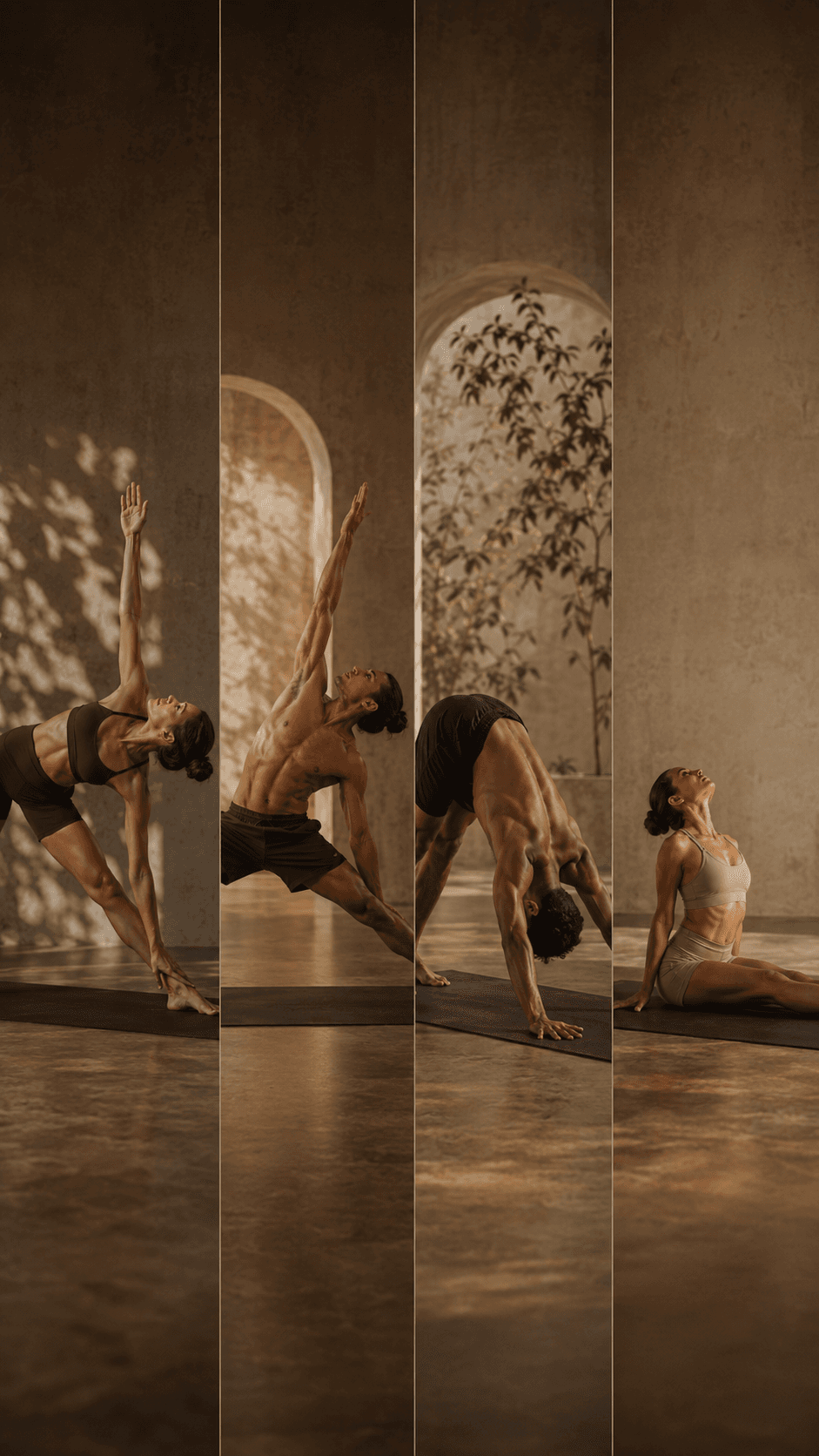
People often ask how long it takes to learn Ashtanga. The honest answer is that you never finish — but the way in matters, and mine ran through nine years of practice and, eventually, through Mysore itself. This is that story, and what it taught me about how the method should be passed on.
Where the practice began
My yoga journey began in 2017 at the Isha Yoga Center. What I found there was not Ashtanga — it was something more fundamental: a consistent personal practice, and the discipline of showing up for it daily. That foundation, more than any posture, is what everything since has been built on.
In 2020 I completed two internationally recognised teacher training programmes. They gave me the scaffolding — philosophy, anatomy, teaching methodology — and I began teaching while continuing to practise. But scaffolding is not a building. I knew the depth I was looking for had to come from somewhere older.
Two years in Rishikesh
I spent the next two years living in Rishikesh — practising, studying, and teaching, and exploring different approaches to movement and philosophy. Rishikesh gives you breadth: every tradition passes through it. What it gave me, in the end, was clarity about wanting the opposite of breadth. I wanted one method, taught properly, from the source. That is when Ashtanga chose me as much as I chose it.
Moving to Mysore
In 2023 I relocated to Mysore, Karnataka — the home of modern Ashtanga Yoga — to study long-term under Vijay Kumar.
Vijay Kumar is one of Mysore’s well-respected traditional Ashtanga teachers. He was introduced to the practice in childhood by his mother and elder brother, and has dedicated his life to it since; today practitioners travel to Mysore from around the world to study under his guidance. What his room is known for is precision — thoughtful hands-on adjustments, and an insistence on preserving the traditional Mysore method exactly as it is meant to work: individually, gradually, one student at a time.
What three years of daily practice taught me
Over three years of daily practice, assisted teaching and study in that room, the method rebuilt my understanding from the ground up. Traditional sequencing — why the postures come in the order they do. The vinyasa — the counted breath that carries you between them. Bandha, the internal work that makes the practice light instead of muscular. And hands-on adjustment as a language: how a teacher’s touch can say what words cannot.
But the deepest lesson was about pace. In a traditional Mysore room, nothing is rushed and nothing is skipped. You are given your next posture when you are ready — not when you are impatient. That gradual, individual progression is not a limitation of the method; it is the method. The sequence is patient. The teacher is patient. Eventually, you learn to be.
How I teach now
My teaching reflects those years: consistency over intensity, patience over performance, and individual guidance over one-size instruction. Mysore-style teaching means every student in the room is met exactly where they are — a complete beginner learning to link breath to movement, and an experienced practitioner refining work they have carried for years, practising side by side.
That is also why I believe Ashtanga is genuinely for everyone. The method does not ask you to be flexible, strong, or experienced. It asks you to come back. My aim is to preserve the integrity of the practice while making it accessible, sustainable and meaningful for people with modern lives — which is exactly what a daily practice in the middle of Bangalore needs to be.
If you want to begin
I teach traditional Mysore-style Ashtanga at the Ignite + Aliign shala at Ulsoor Lake — Mysore self-practice on weekday mornings, Led Primary Series on weekends. Complete beginners are welcome; so are practitioners with an established series. Start with the Ashtanga programme here.