Is Ashtanga good for beginners? The Mysore method, explained
Vishnu Sharma · 7 August 2026
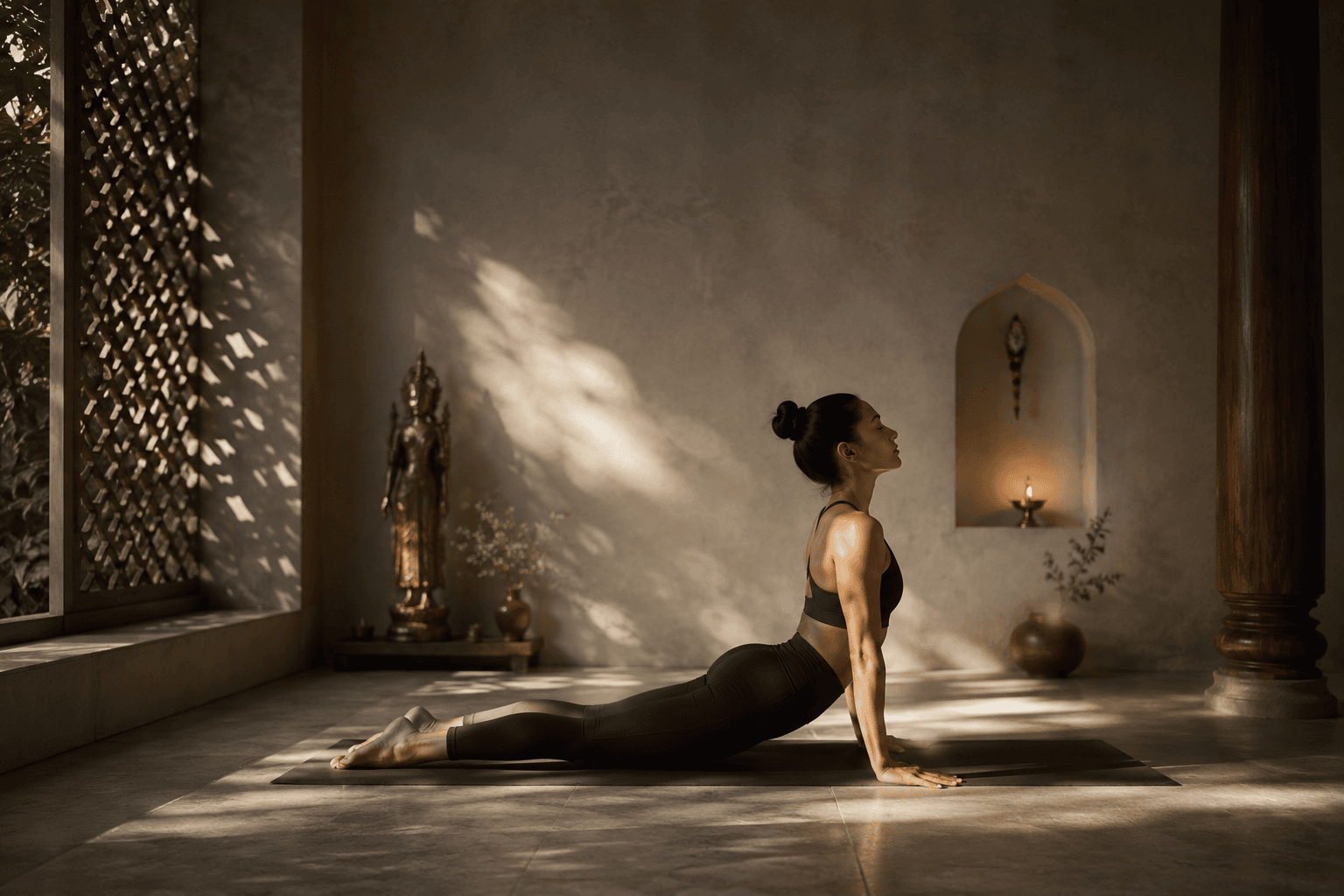
Is Ashtanga good for beginners? Yes — and not in the reassuring-footnote sense. The traditional Mysore method is, by design, one of the most beginner-friendly ways to learn yoga that exists. The misconception runs the other way only because people meet Ashtanga through photographs of advanced postures rather than through the room itself. Let me describe the room.
One-to-one teaching, inside a group
A Mysore-style class has no front of the room and no follow-along instruction. Each practitioner moves through their own sequence at their own breath, and the teacher circulates — watching, adjusting, and teaching each person individually. A complete beginner and a practitioner of fifteen years share the same floor, each doing entirely different work. That is simply how the method has been taught in Mysore for generations.
For a beginner this changes everything. You are never behind, because there is no class to be behind. You are taught your practice posture by posture, and you are given the next one when your teacher sees you are ready — not when the calendar says so.
The sequence does the structuring for you
Ashtanga follows a fixed sequence of postures — the Primary Series — entered and left on a counted breath, the vinyasa. Because the sequence never changes, a beginner has remarkably little to decide: you learn a short opening, you repeat it, and the practice grows at the pace your body earns. Progress becomes honest. The same postures, the same breath, the same mat — and the only variable is you.
Three things run underneath everything
What makes the practice feel continuous rather than like a list of exercises is the internal work: ujjayi breath, steady and audible; drishti, a fixed gaze for each posture; and the bandhas, the internal locks that make the practice light instead of muscular. Nobody masters these first — you meet them gradually, and the teacher’s hands-on adjustments teach much of it without words.
What a first morning actually looks like
At our shala, beginners start in the weekday-morning Mysore room. You arrive, the teacher meets you, and your practice begins that same morning — a few postures, taught one-to-one, with more added over the weeks as your body gets ready. On weekends, the Led Primary Series class lets you hear the full sequence counted in rhythm, so you know where your practice is heading. And you don’t need to be flexible to start — that comes with the practising.
Who the method suits
Ashtanga rewards anyone drawn to structure over novelty: complete beginners who want to be taught properly, runners and lifters who need mobility and breath, and returning practitioners rebuilding a consistent practice. What it asks of you is not ability — it is the willingness to come back. Consistency over intensity, patience over performance.
I teach traditional Mysore-style Ashtanga at the Ignite + Aliign shala at Ulsoor Lake, Bangalore — Mysore self-practice on weekday mornings, Led Primary on weekends. Everything about the Ashtanga programme is here.